
Digital Minimalism
Cal Newport
A case for using technology on purpose: step back from optional apps for a month, then let back in only what serves something you value. Practical rather than preachy.
A little less, every day.
The ideas behind the way we choose things. Twenty books on attention, owning less, money and enough, privacy, craft and slowness, each with a line on why it's worth your evenings.
Borrow them from a library if you can; that's owning less, applied to reading.
On getting your focus back from screens and busyness.
Cal Newport
A case for using technology on purpose: step back from optional apps for a month, then let back in only what serves something you value. Practical rather than preachy.

Johann Hari
An investigation into why so many people find it hard to concentrate, arguing that much of the cause lies in how our world is built, not in personal weakness.

Jenny Odell
An artist's argument for resisting the attention economy by paying attention to something else: the place you live, the birds outside, the people near you.

Cal Newport
Why long stretches of undistracted concentration are both valuable and rare, with rules for building them into an ordinary working week.

Oliver Burkeman
Time management for mortals: you will never get everything done, and accepting that is what frees you to choose what matters.

Nicholas Carr
An argument that a life of skimming links and feeds changes how we read and think, and makes long, deep reading harder. Written before smartphones were everywhere, and more relevant since.

Jenny Odell
The follow-up to How to Do Nothing: a look at where our idea of time as money came from, and other ways of living with time that leave more room to breathe.

James Clear
How small, repeated changes add up, and how to shape your surroundings so good habits are easy and bad ones are awkward. Useful for any of the habits on our Start here paths.
On what changes when you keep fewer things.

Fumio Sasaki
A Japanese editor gives away almost everything he owns and describes what changed. Full of small, concrete rules for letting things go.

Greg McKeown
The disciplined pursuit of less: doing fewer things, better, and learning to say no to good things so you can say yes to the right ones.

James Wallman
The argument that many of us are overwhelmed by possessions, and that experiences do more for us than more things.

Marie Kondo
Tidy by category rather than room, keep what you truly value, and give everything a place. Love it or argue with it, it has helped a great many people let go of things.
On spending as if your time were the real currency.
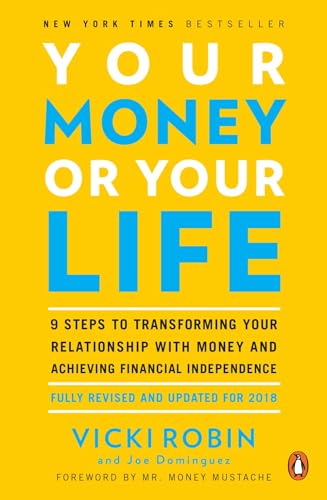
Vicki Robin and Joe Dominguez
Counts every purchase in hours of your life, then walks through steps toward knowing what 'enough' is. The book behind much of the frugal and financial-independence movement.

E. F. Schumacher
Essays on economics 'as if people mattered': human scale, tools that serve people, and using the world's resources with care. Written in the 1970s and still sharp.

Robin Wall Kimmerer
A botanist and member of the Citizen Potawatomi Nation weaves Indigenous knowledge and plant science into essays on gratitude, reciprocity and taking only what you need.
On why your data is worth protecting, and how.

Carissa Véliz
A short, clear book on why privacy is collective as well as personal, with practical things to do about it. The best place to start.

Shoshana Zuboff
How personal experience became raw material for predicting and shaping behaviour. Long and demanding; the book that named the problem.

Edward Snowden
The memoir of the intelligence contractor who revealed mass surveillance programmes in 2013, and what led him to do it.
On making, mending and the quality of things.

Matthew Crawford
A philosopher who became a motorcycle mechanic on the intelligence of manual work and the satisfaction of fixing things yourself.

Robert M. Pirsig
A road trip and an inquiry into Quality: what it means to care about the things you use and the work you do. A novel that reads like philosophy, or the other way round.

Richard Sennett
A sociologist on the desire to do a job well for its own sake, from medieval workshops to modern programmers.

Leonard Koren
A short, beautiful book on the Japanese idea of beauty in things that are imperfect, impermanent and modest. Explains why a worn pan or a patched coat can look right.

Katrina Rodabaugh
A practical, illustrated guide to visible mending: patching, darning and stitching denim and other clothes so they last, with the case for slow fashion.
Older and quieter books on a simpler life.

Henry David Thoreau
Two years in a cabin by a pond and a sustained look at what a person actually needs. Pocket edition.

Marcus Aurelius
A Roman emperor's private notes to himself: what is in your control, what isn't, and how to act well anyway. Short entries, good for reading a page a day.

Carl Honoré
A journalist reports on the slow movement in food, work, cities and medicine, and the case for doing things at the right speed rather than the fastest.

Katherine May
A memoir about the seasons of life when we are forced to slow down, and why rest and retreat are worth learning rather than fighting.